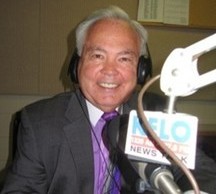
 When Bill “Tell” Zortman was asked how Selma, Alabama, should mark the 30th anniversary (March 1995) of the Selma-to-Montgomery marches, he knew the moment demanded more than a ceremonial program. National media was already arriving, and the way the town was represented would matter long after the cameras left.
“People asked, ‘What are we going to do?’” Zortman says. “I said, ‘Why don’t we do a two-hour show?’”
The event was designed to remember the 1965 "Bloody Sunday" march across the Edmund Pettus Bridge by civil rights leaders, including Coretta Scott King and Joseph Lowery. It became pivotal in passing the Voting Rights Act.
Zortman, now the news anchor for KELO-TV in Sioux Falls, South Dakota, anchored the live broadcast and invited Joe Smitherman, who had been Selma’s mayor during the era of the original marches, to take part in a forum driven by audience questions. By the 30th anniversary in 1995, Smitherman was still in office, reflecting on the city's transformation from the segregationist era of the 1960s.
Zortman's goal during the 30th anniversary was not to soften the conversation, but to keep it fair.
“The audience was going to be asking the questions,” he says. “I told him, ‘I’ll make sure it’s done fairly.’”
The first hour was tense. When it ended, Smitherman told Zortman he wanted to leave the set.
“He turned to me and said, ‘I’m going to leave. They’re just beating me up,’” Zortman recalls. “I said, ‘If you leave, they’re going to say Selma’s mayor couldn’t take it.’”
Zortman promised to help guide the second hour, not by avoiding difficult questions, but by keeping the discussion from turning into something that could damage the town.
“All I had to do was give a few looks, answer a few questions, and do it with a smile,” he says. “I didn’t want them to smear the town or the people who lived there.”
The second hour held. When the broadcast ended, Smitherman understood what had been at stake.
“He said, ‘You just saved my town, didn’t you?’” Zortman recalls.
Zortman said the moment reflected how he has approached broadcasting throughout his career. From expanding coverage in small West Texas towns to bringing together leaders on both sides of the U.S.-Mexico border in El Paso, he has focused on making people feel seen and heard.
“There are more country towns than big towns,” he says of his time in Texas. “So, we made what happened in those smaller towns just as important.”
The Selma broadcast drew national attention, and Zortman said he was written about widely in the days that followed. Three days later, he received a call from leaders connected to the Retirement Systems of Alabama.
“They said, ‘Because of what you did for Selma and Alabama, we want you to be one of our original shareholders for 20 television stations,’” he said.
Zortman said recognition was never the goal.
“I did it because it was the right thing to do,” he says.
Zortman said the lesson from Selma still guides his work.
“A good reporter takes care of people,” he adds. “If you care, you’ll make a difference.”