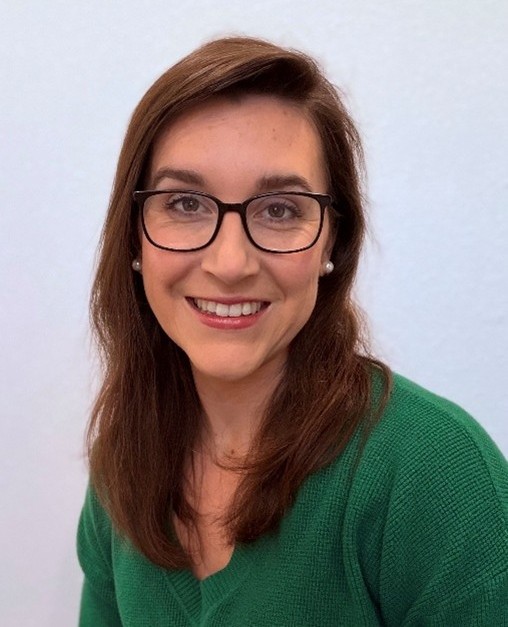
 Lacey Shippy’s broadcasting career began long before college or job titles. It started at age 14, when she was hired with a handshake at a local radio station and spent Friday nights running the board for high school football games.
“I can very specifically remember standing in the boardroom with an Elvis T-shirt on,” Shippy says. “I was 14, I couldn’t drive myself, and my mom would drop me off at work.”
Radio quickly became home. By her senior year of high school, Shippy was hosting a midday show and a request program on the station’s most popular channel. Music and radio were the draw, but agriculture soon shaped the direction.
“I watched Orion Samuelson and Max Armstrong on This Week in Agribusiness every Sunday,” she says. “I told myself, ‘That is what I’m going to do.’”
Shippy went on to earn a degree in agricultural economics and small business from Virginia Tech. After college, she worked in radio in Yankton, South Dakota, before stepping away from broadcasting to focus on family. Nearly nine years passed as she raised four children and stayed rooted in agriculture alongside her husband, a farmer-rancher.
Her return to radio came when an opportunity opened with the Rural Radio Network. Shippy now serves as a market anchor, delivering daily market coverage from her home in South Dakota while the network is based in Nebraska.
“It sounded awesome because it was something I could do here at home while my kids were in school,” she says. “It has worked out beautifully.”
Shippy’s schedule allows her to anchor markets during the day and be present when her children return home in the afternoon. She also balances farm life, family, and a custom alterations business, a rhythm she says has been challenging but deeply rewarding.
Beyond markets, Shippy recently launched a new segment called The Good Life, a short, post-market feature built around storytelling and reflection.
“The markets can get very heavy,” she says. “I thought it would be nice to end the day with something that feels like a pick-me-up.”
Inspired by communicators like Paul Harvey and Baxter Black, The Good Life blends personal experience with observations from rural life. Shippy describes it as the thoughts that surface while standing in a pasture or sitting in a tractor cab.
“They’re the thoughts you don’t always say out loud,” she says. “But they might be interesting for someone else to hear.”
For Shippy, farm broadcasting has always come back to one thing.
“It’s the people,” she says. “You wouldn’t do farm broadcasting if it wasn’t for the farmers.”
Now back behind the microphone, Shippy says she feels fortunate to combine markets, storytelling, and agriculture in a way that fits both her professional passions and her family life.
“So far,” she says, “it’s been the best of all worlds.”